
Recent News
How to Photograph Padel Through Glass on a...
How to Take Better Photos With an iPhone
What You Should Do With Your Old Printed...
Phone Camera Settings Explained for Beginners
How to Choose the Right GoPro Accessories for...
7 Tips For Starting Out In Photography
Framing the Fairway: The Art of Photographing Golf...
Best Photo Opportunities in Miami
How to protect your brand from malicious and...
Six Tips to Consider When Creating an Outstanding...
  • About Us
  • Write For Us
  • Advertise
  • Resources
  • Contact Us
DC Mag
  • Home
  • Advice
    • Photography Showcase
    • Tips and Techniques
  • Brands
  • Reviews
  • Roundups
  • Trends
  • Camera Bag
  • Marketing
  • Online
  • Contact Us

Online

Online

Six Tips to Consider When Creating an Outstanding Ecommerce Web Design

by Mark Bailey June 9, 2022
written by Mark Bailey

Good website user experience and amazing ecommerce website design is crucial in the cutthroat world of online retail. Your ecommerce website is analogous to a mall store where the initial impression is crucial. A nice window display will bring in customers, and well-organized goods will make them want to look around and buy.

It’s critical to have a good ecommerce website design if you want to convert website visitors into consumers. In an ideal world, your website’s design elements would make the shopping experience and purchasing procedure as simple, quick, and stress-free as possible.

However, just as cluttered and disorganized businesses deter people from stepping in and hence lose sales, lousy ecommerce web designs can reduce traffic and, ultimately, revenue. Not to mention the fact that you might not be recognized by search engines.

So, whether you’re using a Shopify store, a WordPress site, or any of the other options—Magento, PinnacleCart, BigCommerce, Shift4Shop, WooCommerce, or Wix—we’ve compiled a list of six tips to keep in mind while designing your ecommerce store

Prioritize Your Branding Efforts for Your Ecommerce Store

When it comes to online shopping, customers prefer to buy from well-known companies rather than generic ecommerce sites.

Put some real thinking into your branding if you want to develop the trust you need to drive serious sales with your ecommerce business. Your ecommerce business’s branding is like its DNA; it’s who you are as a company, what you’re about, and how you’re different from your competitors—and it’s crucial for connecting with customers and increasing sales.

Put Your Best-Selling Items in the Spotlight

Your store’s most popular items should be highlighted. This could refer to things that sell the most, have the best customer reviews, or make you the most money.

To promote these top products, in your web design,  try using different colors to draw attention to them, changing the layout or image size, and creating banners. You’ll get more sales if you can shift people’s attention to the top products you wish to promote. This is similar to creating a display around a top product or placing it at eye level on a store shelf.

Use High-Resolution Images and Videos

Because visitors do not have the ability to see the products in person, they must rely on their photo and video representations. This is an area where brick-and-mortar retailers have an unmistakable advantage. At least for the time being. As a result, high-quality photographs and videos are critical for modern ecommerce website design. The more accurate this picture is, the more likely users will prefer the online store in question. High-resolution photographs, 360-degree views, 3D models, and films are all included.

For example, using the correct Shopify image sizes will help your Shopify store convert better. The same goes with other ecommerce platforms as well.

Make It Simple for Your Customers to Find What They’re Looking for

Customers will be less satisfied with your brand if it is difficult for them to find what they need on your website. Consider entering a store and being met with a haphazard and confusing layout.Isn’t that not very impressive? That’s exactly how visitors will feel when they come across a website that plainly does not prioritize user experience.

Here are some things to think about: The simplest solution is always the best. It will be more difficult to direct your clients to your desired call-to-action (CTA) if you have a lot going on. To keep your website organized, make sure it has a clear navigation menu and sections that are correctly designated. A search bar with suitable filters should be included.

Keep in Mind SEO Best Practices

When it comes to your ecommerce website, Search Engine Optimization (SEO) cannot be overstated. SEO is a method of improving your ranking in search results. You’ll get more exposure for your website, more views, and a wider reach if you put a lot of effort into SEO.

When it comes to ecommerce SEO advice, there are three things that stand out: use relevant keywords, write smart product descriptions, and take advantage of built-in tools.

Make your Ecommerce Web Design Mobile-Friendly

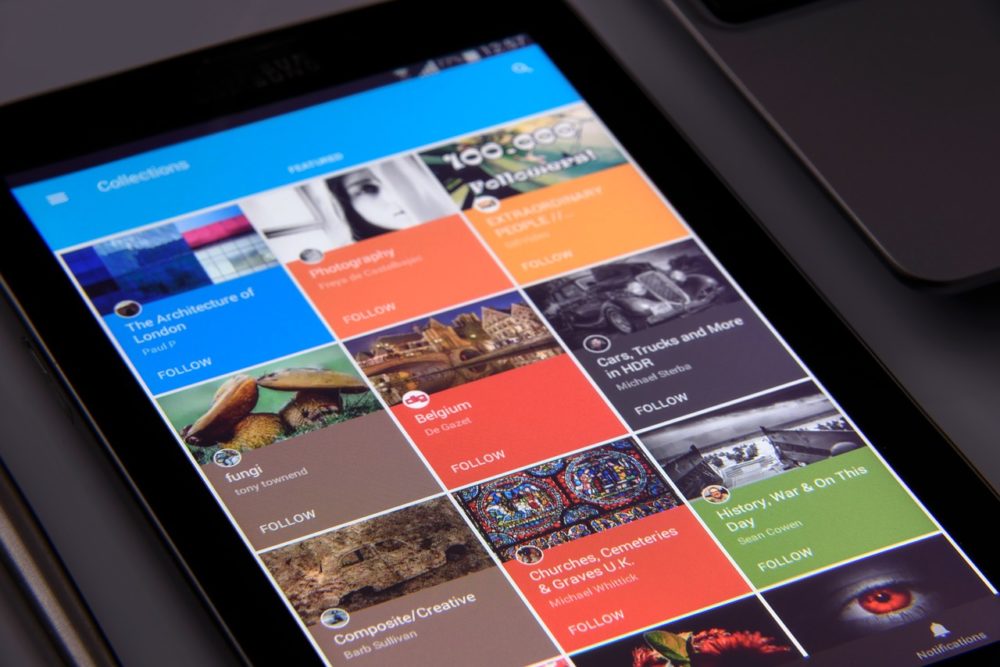
79 percent of smartphone users have made an online purchase using their mobile devices in the last six months.In other words, more than three-quarters of internet shoppers now shop at online retailers.

If an ecommerce website is not optimized for mobile devices, all of the interface elements and text will appear too small when viewed on a smartphone. The website would be inconvenient for a human to utilize.


The importance of having a mobile version of a website in 2022 is undeniable. If a website doesn’t have a responsive version, users won’t be able to use it or interact with it properly. This could cause them to leave a store in favor of another.

 

June 9, 2022 0 comments
0 FacebookTwitterPinterestEmail
Online

Browser vs. Apps: Is the Continuing Development of Browsers Putting Apps at Risk?

by Mark Bailey April 19, 2018
written by Mark Bailey

Mobile users have long been faced with the choice of using either a browser or an app. This often comes down purely to personal preference. Some people simply prefer using apps, while others feel more comfortable on a browser.

Yet, is the continuing development of browsers putting the future of apps at risk? While the traditional view has been that apps may kill off browsers eventually, there is also a theory that it could work the other way round.

So, what lies at the heart of this debate? The fact is that the browser vs. apps issue is something that divides users as much as it divides brands and developers.

When Is Browser Best?

Using the browser on your mobile device is ideal when you want to visit a site that you don’t use often. After all, there is no need to have an app on your home screen for a brand that you rarely use. Companies tend to see a good, mobile optimised website as being ideal for reaching out to new users conveniently.

A good example of when browser is best is when contacting a business for the first time to ask for basic details, or when searching for information. Unless you already have a favourite store or brand to buy your equipment from, browsing will typically give a better selection to choose from.

When Is An App Best?

It is no surprise to see that the biggest brands perform better than smaller companies when it comes to apps. Amazon and Walmart are a couple of the giant companies that earn as well or better from their apps as from their websites.

One of the questions that consumers need to ask themselves is if they want to put a particular brand’s app and logo on their home screen. If they do, then it is likely to be a brand that they like, trust and deal with on a regular basis.

If you have several products at home from Samsung or Canon or Toshiba then the chances are that you will download an app from them at some point. An app lets you go further in depth with a brand and build up a stronger, lasting relationship.

What Does the Future Hold?

Ultimately, whether a person uses a browser or apps comes down to what they are planning to do. A report from Morgan Stanley in 2015 suggested that mobile browser traffic is twice the volume of app traffic, but this only tells us half the story.

Other reports suggest that mobile users spend 80% of the time on their devices using apps. It certainly seems as though there is still room in the mobile market for both of these ways of interacting with a brand.

April 19, 2018 0 comments
0 FacebookTwitterPinterestEmail
Online

Remembering The Lives of Professional Photographers

by Mark Bailey February 17, 2017
written by Mark Bailey

Celebrating their lives

Different breeds of professionals influence the world of photography through their unique styles and skills. As technology continues to evolve, photography has changed dramatically, but the basics remain the same- capturing emotions, moments and actions in still pictures. 2016 and 2017 saw the loss of some photographers who have made significant contributions throughout their careers. The following is a celebration of a few of them and their achievements in the sector.

Lord Snowdon

Born Anthony Armstrong-Jones, Lord Snowdon was renowned for his documentary work, celebrity and society photography. He died aged 86 and left behind a collection of some of the best works in the field of photography. For more than 50 years, Lord Snowdon grew a reputable career, which got a big boost when he became the establishment’s photographer in the 1960s. He earned the title of Lord Snowdon after marrying Princess Margaret. Experts in the industry describe Snowdon’s impact to be monumental in many ways. His list of subjects is a mile long and includes some notable names in society. He has portraits of Julie Christie, John Hunt and Barbara Hepworth, among others. The National Portrait Gallery has 130 original prints of these portraits, which were a donation from Snowdon in 2014. Throughout his career, Lord Snowdon insisted on keeping his techniques simple and wasn’t much for technology. He worked for British Vogue and Sunday Times.

Jeff Pitts

Pitts first started out at the Flintshire Chronicle, but his longest job was at the North West Daily Post where he worked for 20 years. Colleagues and people in his circles described him as a humorous, true professional. At the time of death, Pitts was running his own photography business, which he started after leaving the Daily Post in 2012. He was an all-rounder since he covered presswork, weddings and public relations.

Marc Riboud

Riboud, born in St-Genis-Laval is famous for the image of Jan Rose Kasmir, a Vietnam War protestor. The photograph, taken in 1967 in Washington D.C., was of Kasmir confronting the National Guard while holding a flower. This picture later became the icon for the flower power movement, and it is also credited as altering public perception vis a vis the Vietnam War. Riboud started out working for Magnus, going all over the world taking photographs in regions like China, Iran and Pakistan. He is also famous for his works during the 1960s Cultural Revolution in China. Riboud is hailed as one of the greatest for his creativity and unmatched skills, which enabled him to bring out each tumultuous emotion in a single print.

Bill Cunningham

You can’t talk about fashion photography without naming Cunningham. He was an icon in the field and his work at the New York Times is unparalleled. Bill Cunningham’s career spanned four decades, and in that time, he photographed the most beautiful and glamorous subjects for magazine covers, but he never let the allure of the business get to him. He was known to bike to and from work, which gave him a chance to take as many photos as he could of everything that he came across. He died in 2016 from health complications.

These are only some of the icons and legends who have inspired generations of photographers. Some of them passed away unexpectedly, which exaggerates the suddenness of death. Prior preparations for such eventualities save families a lot of trouble as they grieve. Making all the necessary arrangements in advance can also cost less compared to waiting for the last minute rush. Additionally, relatives have the chance to celebrate such fulfilled lives without worrying about the minutiae.

February 17, 2017 0 comments
0 FacebookTwitterPinterestEmail
Online

Landmark Law Gives the Digital Legacy’s Rights of the Deceased in the Hands of their Heirs

by Mark Bailey October 23, 2015
written by Mark Bailey

The US state of Delaware just this week passed a landmark law that gives the digital legacy’s rights of the deceased in the hands of their heirs. The issue found resonance in India too, because the country has an Internet user base up to nearly 250 million people that on a scale never witnessed before is sharing and creating content. Soon, in India there will be more Facebook users than anywhere else in the world. India is viewed as the next biggest and potential frontier by Twitter and the perfect digital storm is being created by the internet-enabled business models driving forward everything from booking a table at a restaurant to taxi rides.

So the question is after millions of users in India leave behind their digital remains what will happen to them? When it comes to plan the afterlife, like in most parts of the world, companies and users are still dealing with a blurred digital ignorance and regulatory framework.

Continue Reading
October 23, 2015 0 comments
0 FacebookTwitterPinterestEmail
BrandsOnline

Donuts Inc

by Mark Bailey October 17, 2015
written by Mark Bailey

I had the opportunity this month to talk to Mason Cole and Jon Nevett of Donuts, which is the biggest filer of generic top-level domains applications. Once they have heard the word donuts, the majority of people first think of the food they try to avoid throughout morning meetings. However, Donuts Inc. is a corporation that filed for 307 gTLDs, such as .network, .media, .fashion, .enterprises, .email, .condos, .computer to name a few.

In 2014, Donuts is right on track to operate thousands of new domains. Some of the first set of domains includes .voyage, .singles, .holdings, .clothing, .camera, .ventures, .guru and .lighting will soon enter or they have already entered the sunrise period which is a time for trademark holders for exclusive access to registrations and in January 2014 it will be available to the public. I asked the one important question what digital marketers have to know about the Donuts’ gTLDs as it is the biggest applicant for top-level domains.

Continue Reading
October 17, 2015 0 comments
0 FacebookTwitterPinterestEmail
Online

SEO Is Not Just About Google

by Mark Bailey September 20, 2015
written by Mark Bailey

You need not be penalized for thinking that SEO is all about Google. We all do. Google is the first thin that we think about when we hear the word SEO. SEO is all about how you rank in the search engine page and the visibility that you have. We are have internalized the fact that only Google is responsible for our SEO content which is not the case. A lot of times you will hear your seniors asking why your company is not ranking on Google. However, there are many search engines that you can use to increase your visibility in the online platforms. You don’t have to look very far to get these search engines that you can use daily to increase the visibility of your company online. Here are some of the search engines that are responsible for SEO rankings.

Continue Reading
September 20, 2015 0 comments
2 FacebookTwitterPinterestEmail
banner

Categories

  • Advice (36)
  • Brands (13)
  • Camera Bag (10)
  • Featured (13)
  • Features (1)
  • Marketing (14)
  • Online (6)
  • Photography Showcase (7)
  • Reviews (12)
  • Roundups (4)
  • Showcase (8)
  • Tips and Techniques (21)
  • Trends (14)
  • Uncategorized (1)

About Us

DC Mag is packed with expert advice, inspirational images, digital photography tips and techniques, photo editing lessons and video tutorials. This includes reviews, digital camera best buys, buying advice, news and more...

Editors Picks

  • 1

    The Most Influential Thought Leaders in the Digital Marketing Industry

    February 13, 2016
  • 2

    Unleash Your Digital Business

    February 13, 2016

Keep in touch

Facebook Twitter Pinterest Tumblr Youtube

@2022 - Dcmag. All Right Reserved.


Back To Top
DC Mag
  • Home
  • Advice
    • Photography Showcase
    • Tips and Techniques
  • Brands
  • Reviews
  • Roundups
  • Trends
  • Camera Bag
  • Marketing
  • Online
  • Contact Us