

A GoPro is built for action, travel and outdoor filming, but the camera alone is rarely enough to get the best shots. The right accessory can help you hold the camera steadier, mount it safely, keep it floating in water, extend battery life, record more footage or capture a point of view that would be impossible by hand.
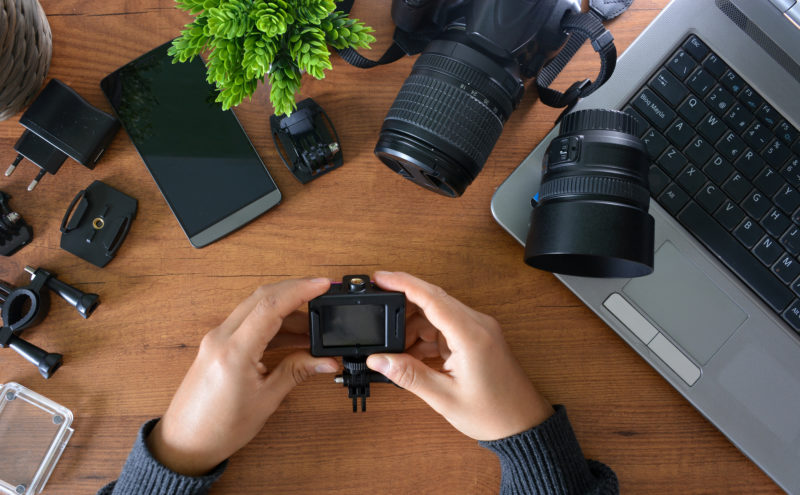
Quick answer: which GoPro accessories should you buy first?
Most GoPro users should start with a grip or mini tripod, a spare battery, a fast microSD card, a protective case and one mount that suits their main activity. For water use, add a floating hand grip or Floaty. For cycling, skiing or paddling, choose a chest mount or handlebar/pole mount. For travel, a small tripod grip and compact case are usually more useful than a large bag of mounts.
| Use case | Best first accessory | Why it helps |
|---|---|---|
| Travel and days out | Shorty or mini tripod grip | Helps with selfies, group shots, time-lapses and stable clips. |
| Snorkelling, kayaking or pool use | Floating hand grip or Floaty | Helps stop the camera sinking if dropped. |
| Cycling and mountain biking | Chest mount or handlebar mount | Gives a more immersive riding point of view. |
| Skiing and snowboarding | Chest mount, helmet mount or pole mount | Keeps hands free and captures movement through the scene. |
| Long filming days | Spare Enduro batteries and charger | Reduces the risk of running out of power mid-shoot. |
| High-resolution video | Compatible fast microSD card | Prevents recording problems and gives enough storage. |
Check compatibility before buying anything
GoPro accessories are not automatically compatible with every GoPro camera. Older HERO cameras, newer HERO models, MAX cameras and the latest specialist cameras may use different batteries, doors, mods, mounts or housings.
Before buying an accessory, check:
- Your exact camera model
- Whether the accessory fits that model
- Whether it works with any protective case or housing you use
- Whether it blocks charging, microphones or screens
- Whether it is safe for the activity you plan to film
Official GoPro accessories are the safest starting point because compatibility is clearly stated. Reputable third-party accessories can also be useful, but avoid cheap mounts, batteries or waterproof housings with poor reviews, unclear compatibility or no safety information.
GoPro Travel Kit: best for holidays and everyday use
The GoPro Travel Kit is a good starting point for holidays, city breaks, family days out and casual content creation. The current kit includes Shorty, a mini extension pole and tripod, plus a Magnetic Swivel Clip, mounting buckle, thumb screw and compact case.
Shorty is useful because it solves several everyday problems. You can hold it as a small grip, extend it slightly for selfies or group shots, or stand it on a level surface for time-lapses and hands-free filming.
The Magnetic Swivel Clip is useful for clipping the camera to a backpack strap or gear, and the compact case keeps small accessories together while travelling.
Best for: travel, family holidays, vlogging, walking tours, time-lapses, group photos and casual filming.
Less useful for: high-impact sport, deep water, motorsport or activities where a more secure mount is essential.
GoPro Adventure Kit: best for water, hiking and hands-free clips
The GoPro Adventure Kit is aimed at outdoor use. It includes The Handler floating hand grip, Head Strap 2.0, a removable clip mount, thumb screw and compact case.
The Handler is especially useful around water. It gives you a steadier grip and helps the camera float if you drop it. GoPro describes The Handler as a floating hand grip with a bright orange end that pops to the surface, making it easier to spot in water.
Head Strap 2.0 is useful for hands-free point-of-view footage, but it is not the right mount for every activity. GoPro warns that the Head Strap and Clip Mount are for non-impact activities only, so do not treat it as a universal extreme-sport mount.
Best for: snorkelling, kayaking, hiking, fishing, travel clips, simple POV shots and casual outdoor use.
Less useful for: high-impact activities where a helmet, chest or specialist mount would be safer.
GoPro Sports Kit: best for cycling, skiing and action footage
The GoPro Sports Kit is designed for more active filming. It includes Chesty, the performance chest mount, plus a Handlebar/Seatpost/Pole Mount and a compact case.
A chest mount gives a more immersive point of view than holding the camera by hand. It can show your arms, handlebars, skis, board, paddle or the terrain in front of you. This makes the footage feel more natural than a camera pointed only at your face.
The Handlebar/Seatpost/Pole Mount is useful for bikes, ski poles and other round tubes. It can give a cleaner equipment-mounted angle, but it needs to be fitted securely and checked before use.
Best for: cycling, mountain biking, skiing, snowboarding, paddling and hands-free sport footage.
Less useful for: simple travel filming, family holidays or indoor use where a small grip would be easier.
Floating grips and Floaty: essential for water
If you use a GoPro near water, a floating accessory is one of the most sensible purchases. Even waterproof cameras can be lost if they sink.
A floating hand grip, such as The Handler, gives you something comfortable to hold and helps the camera float if dropped. A Floaty is a separate floating accessory designed to add buoyancy to compatible cameras.
Use floating accessories for:
- Snorkelling
- Kayaking
- Paddleboarding
- Swimming pools
- Beach holidays
- Boat trips
Always check depth limits before filming underwater. Some GoPro cameras are waterproof out of the box, but waterproof depth varies by model and setup. If you are diving deeper than the camera’s built-in rating, use the correct protective housing.

Spare batteries and charger: important for long days
GoPro batteries can drain quickly when recording high-resolution video, using stabilisation, filming in cold conditions, using screens, or capturing long time-lapses. A spare battery is one of the most useful accessories for almost every user.
GoPro currently sells Enduro batteries and dual chargers for different camera models, including separate options for HERO13 Black and for HERO12, HERO11 and HERO10. Do not assume batteries are interchangeable across all cameras.
For long filming days, consider:
- Two or three compatible batteries
- A dual battery charger
- A USB-C power bank
- A safe case for loose batteries
- A charging plan for hotels, cars or campsites
Keep batteries dry, avoid leaving them in direct sun, and follow the manufacturer’s charging guidance.
Memory cards: do not buy the cheapest one
A GoPro needs a reliable microSD card to save photos and videos. High-resolution video can fail if the card is too slow, unreliable or not compatible.
For HERO13 Black, GoPro says you need a brand-name microSD, microSDHC or microSDXC card rated V30, UHS-3 or higher, with capacity up to 1TB. Other models may have different requirements, so check the guidance for your exact camera before buying.
A sensible starting point for most current GoPro users is:
- At least one reputable 128GB or 256GB microSD card
- V30 / UHS-3 rating or higher where required
- A spare card for longer trips
- A small card case to keep cards clean and safe
Do not wait until the card is full before thinking about storage. Back up footage during the trip where possible, especially if you are filming something you cannot repeat.
Mounts by activity
| Activity | Useful mount | Shot it helps capture |
|---|---|---|
| Travel | Shorty or small tripod grip | Selfies, group shots, walking clips and time-lapses. |
| Snorkelling | Floating hand grip | Stable handheld footage above and below the water. |
| Cycling | Chest mount or handlebar mount | Immersive rider POV or bike-mounted footage. |
| Skiing | Chest mount, helmet mount or pole mount | Slope, hands, poles and movement through the scene. |
| Hiking | Clip mount, tripod grip or head strap | Walking POV, landscape shots and hands-free clips. |
| Vlogging | Grip, tripod, light or microphone accessory | More stable talking-head footage and better framing. |
| Motorsport | Specialist secure mount | Vehicle-mounted action, only where safely and legally attached. |
Protective cases and waterproof housings
A protective case can help guard the camera from knocks, scratches, mud and travel damage. A waterproof housing is different: it is designed for deeper water or harsher underwater use than the camera can handle alone.
Use a protective case or housing when:
- You are diving deeper than the camera’s built-in waterproof rating
- The camera may hit rocks, boards, bikes or equipment
- You are filming in mud, sand or rough conditions
- You are packing the camera with other hard objects
Check whether the case affects audio, heat, touch controls or lens compatibility. A case that is perfect for diving may not be ideal for vlogging or long hot-weather filming.
Selfie sticks, poles and tripods
A pole or grip can improve GoPro footage because it creates distance between you and the camera. That helps with selfies, group shots, skiing clips, walking shots and travel videos.
For most users, a compact grip or mini tripod is more useful than a long selfie stick. A small tripod can sit on a wall, table, rock or beach bag for time-lapses, group photos and stable video.
Longer poles are better for skiing, snowboarding, skating and wide action shots, but they are less convenient to carry and may not be allowed in every venue or attraction.
Should you buy official GoPro accessories?
Official GoPro accessories are usually the simplest and safest option because compatibility and use cases are clear. That matters for batteries, waterproof accessories, mounts used at speed, and anything that protects the camera from loss or damage.
Third-party accessories can still be good value, especially for simple cases, tripods, clips and storage. The key is to check reviews, compatibility, materials and safety warnings. Be more cautious with batteries, waterproof housings, suction mounts and high-impact mounts.
What to avoid
- Buying a large accessory bundle before knowing what you actually film.
- Using cheap mounts for high-speed or high-impact activities.
- Assuming every accessory fits every GoPro model.
- Using a slow or unreliable microSD card for high-resolution video.
- Taking a waterproof camera deeper than its rated limit without housing.
- Using old batteries that no longer hold charge properly.
- Mounting a camera where it could injure someone or distract you.
Best GoPro accessories for beginners
If you are buying your first GoPro accessories, keep it simple. Start with the items that solve the most common problems.
- Mini tripod grip: for travel, selfies, group shots and stable clips.
- Fast microSD card: for reliable video recording.
- Spare battery and charger: for longer filming days.
- Compact case: to keep the camera and mounts organised.
- Floating grip: if you film near water.
- Chest mount: if you film cycling, skiing or action sports.
Buy for your next real trip or activity, not for an imaginary future adventure. If you are going snorkelling next month, buy water accessories first. If you are filming bike rides, buy a secure cycling setup. If you mostly film family holidays, a small grip and spare battery may be enough.
Frequently asked questions
What is the most useful GoPro accessory?
For most people, the most useful first accessory is a small grip or tripod such as Shorty, plus a compatible fast microSD card and spare battery. If you film near water, a floating grip becomes essential.
Do I need a GoPro accessory kit?
A kit can be good value if you will use most of the items. The Travel Kit suits holidays and casual filming, the Adventure Kit suits water and outdoor use, and the Sports Kit suits cycling, skiing and action footage.
Can I use third-party GoPro accessories?
Yes, but choose carefully. Third-party accessories can be useful, but check compatibility, reviews and safety. Be especially cautious with batteries, waterproof housings and mounts used at speed.
Do GoPro cameras need a memory card?
Most GoPro cameras need a microSD card for photos and video. Check the requirements for your exact model. Current high-resolution models usually need a fast, reputable card rather than the cheapest option available.
What GoPro accessory do I need for snorkelling?
Use a floating hand grip or Floaty, a wrist strap and a suitable waterproof setup for your camera model. Check the camera’s depth rating before going underwater.
What GoPro accessory is best for cycling?
A chest mount gives an immersive rider view, while a handlebar or seatpost mount gives bike-mounted footage. Use secure mounts and check them before riding.
Final thoughts
The right GoPro accessory depends on the shot you want. A travel grip helps with selfies and stable clips. A floating handle protects your camera around water. A chest mount makes cycling and skiing footage feel more immersive. A spare battery and fast memory card keep the camera working when the moment happens.
Do not buy accessories just because they come in a large bundle. Think about your next trip, sport or project, then choose the mount, power and storage setup that fits that situation. A small, well-chosen kit will usually beat a drawer full of accessories you never use.
